

Why Wilburton’s Growth Matters for Downtown Bellevue Condo Owners
For most of the last 30 years, the Wilburton neighborhood was the quiet east side of downtown Bellevue. Light industrial, big-box retail, surface parking, and the I-405 corridor cutting it off from the urban core. Most downtown condo owners drove through it on the way to somewhere else and gave it about as much thought as you would give an interchange.
That is changing fast. Wilburton has been formally rezoned, the housing pipeline is filling, and the Grand Connection Crossing is moving from concept to procurement. By the time the bridge opens around 2030, downtown Bellevue’s urban core will effectively double in walkable size.
If you own a downtown condo, this is one of the biggest forward-looking value stories in the market. Here is the why, and what to actually watch.
What Is Actually Happening in Wilburton
Wilburton is a 300-acre neighborhood directly east of I-405, between downtown Bellevue and the Bel-Red corridor. The Eastrail trail runs through the middle of it, and the East Main and Wilburton light rail stations sit on its southern edge.
Three things give the area its current trajectory:
The 2025 rezone. In June 2025, the City Council adopted Ordinance 6846, which created four new mixed-use land use districts in Wilburton and set design standards for housing, jobs, walkability, and open space. This was the largest single zoning change in Bellevue in years.
The growth target. The city’s goal for the area is 15,000 new homes and 35,000 new jobs over the next two decades. To put that in context, downtown Bellevue today has roughly 14,000 to 15,000 housing units total. The plan is to add the equivalent of another downtown’s worth of housing immediately across I-405.
The housing pipeline. Since the rezone took effect, developers have submitted applications for more than 2,300 housing units in Wilburton. That is the early indicator that the rezone is working as intended. Permits and projects are not waiting on a slow ramp.
Add the new eight-year Multifamily Tax Exemption program the city extended into Wilburton, and the development math gets even more favorable for housing.
The Grand Connection Crossing Is the Piece That Ties It Together
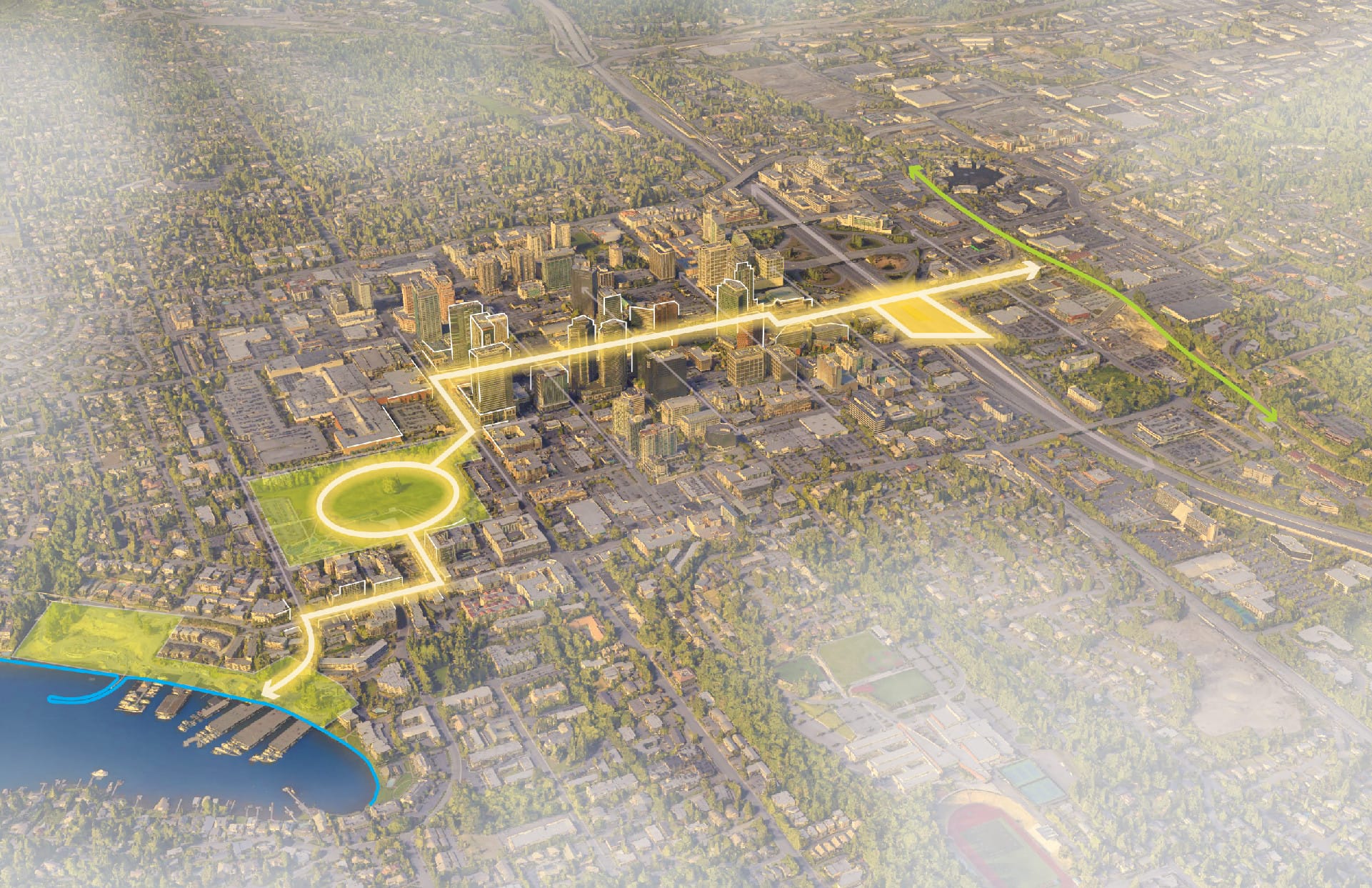
The Grand Connection Crossing is the planned 2,200-foot pedestrian and bicycle bridge over I-405. It will physically connect the eastern edge of downtown Bellevue, near the Bellevue Transit Center and Meydenbauer Center, to Wilburton and the Eastrail trail.
Current status as of May 2026:
The city has secured the regulatory approvals needed to deliver the project using a General Contractor / Construction Manager (GC/CM) method, which is the same approach used for complex Sound Transit projects. An RFP for the contractor was issued in early 2026, and design work picks back up once the contractor joins the team.
The targeted opening is 2030. The total project cost is estimated at $175 to $230 million, with a multi-tiered funding plan including city, regional, and state contributions. In May 2026, King County formally signaled funding cooperation, which was a meaningful signal that this project has regional buy-in beyond the city alone.
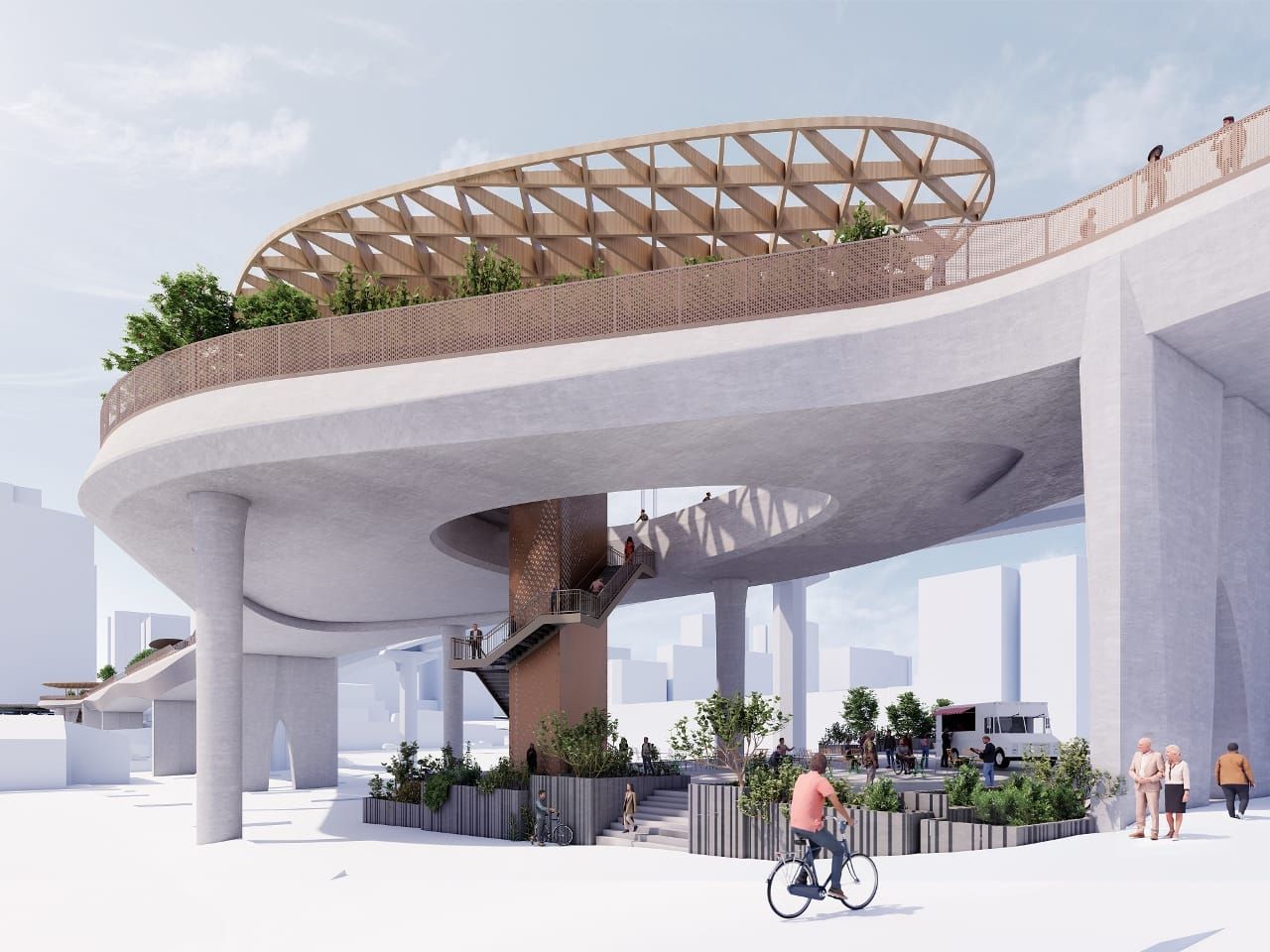
The crossing is not a recreational amenity stapled to the side of an interchange. It is being designed as an extension of the downtown walkable experience, with public space, programming, and direct connections into adjacent development sites. The city has been explicit that future Wilburton developments along the alignment may be designed to connect directly into the crossing, which means the bridge becomes the spine of a much larger walkable network, not a standalone span.
Why This Matters for Downtown Condo Owners
A few specific reasons this is worth paying attention to as an owner:
Your effective walkable footprint expands. Today, the practical edge of walkable downtown from most condo buildings ends at the freeway. After the crossing opens, a walk from a building near the Bellevue Way or 108th corridor reaches Eastrail, the new Wilburton retail and dining, and eventually a second cluster of urban density. Walk scores for east-side downtown buildings should rise meaningfully.
Amenities will follow the rooftops. Fifteen thousand new homes is the kind of population base that supports restaurants, grocery, services, and gathering spaces at scale. A lot of those amenities will land in Wilburton, but the foot traffic flows both ways across the crossing. Expect more reasons to walk east from downtown over the next decade.
Eastrail becomes an everyday asset. Eastrail is a 42-mile regional trail. Once the crossing connects downtown to it directly, downtown condo owners get easy walking and biking access to the entire Eastside trail network from their front door. For buildings closer to the eastern edge of downtown, this is a real day-to-day quality of life upgrade.
The east-facing view gets more interesting. Right now, east-facing units in many downtown buildings look out at low-rise commercial buildings and parking. As Wilburton builds out, that skyline fills in. For some units that means trade-offs in view quality. For others, particularly higher floors, it means looking out at a coherent urban skyline instead of surface lots.
Why This Matters for Buyers and Investors
For buyers, this is a meaningful forward-looking factor in building selection. East-side downtown buildings closer to the Grand Connection alignment will benefit most directly from the walkability changes. That includes buildings near 108th Avenue NE and along NE 6th and NE 8th between 108th and the freeway. Worth asking, when touring a unit: what does the walk look like from this building after the crossing opens? For some buildings, the answer changes the property substantially.
For investors, the story is straightforward. Bellevue is one of the few markets in the country where the public sector is actively building infrastructure to expand the walkable urban core rather than letting growth disperse. Combined with the Downtown Livability 2.0 code work happening in parallel, the next ten years of Bellevue’s downtown story is being actively shaped right now, not passively unfolding. Pricing in 2026 does not yet fully reflect the 2030 walkability footprint.
A few specific signposts worth tracking:
- The Grand Connection Crossing contractor selection, which determines the construction schedule and the realistic 2030 opening date
- Wilburton building permits and groundbreakings, especially along the future crossing alignment, since those will set the tone for what greets the bridge when it opens
- Bellevue’s Downtown Livability 2.0 process, which is expected to address how the eastern edge of downtown coordinates with Wilburton and the crossing
- MFTE-eligible projects in Wilburton, which signal where the affordable and workforce housing will concentrate
The Bottom Line
The Grand Connection Crossing and the Wilburton rezone are two halves of the same story. The rezone creates the new neighborhood. The crossing makes that neighborhood part of downtown Bellevue in a practical, walkable sense.
For downtown condo owners, this is the kind of slow-moving infrastructure and policy story that quietly determines whether your building’s walkability, amenity base, and resale appeal in 2030 are meaningfully better than they are today. Our read: yes, especially for buildings on the eastern half of downtown.
We will be tracking the crossing and Wilburton’s buildout closely. If you want to talk through how the alignment might affect a specific building or potential purchase, get in touch.