

Buying a condo in downtown Bellevue is one of the most significant financial decisions most people ever make – and it is more complex than buying a single-family home in important ways. HOA health, building-specific resale dynamics, view and floor analysis, parking situations, and pet and rental policies are all variables that Zillow and Redfin don’t help you evaluate.
This guide exists to fill that gap. We cover the questions experienced downtown Bellevue buyers ask – and the questions they wish they had asked. Use it to shortlist buildings, understand what you’re evaluating, and enter conversations with agents and sellers from a position of real knowledge.
Choosing the Right Building – The Most Important Decision
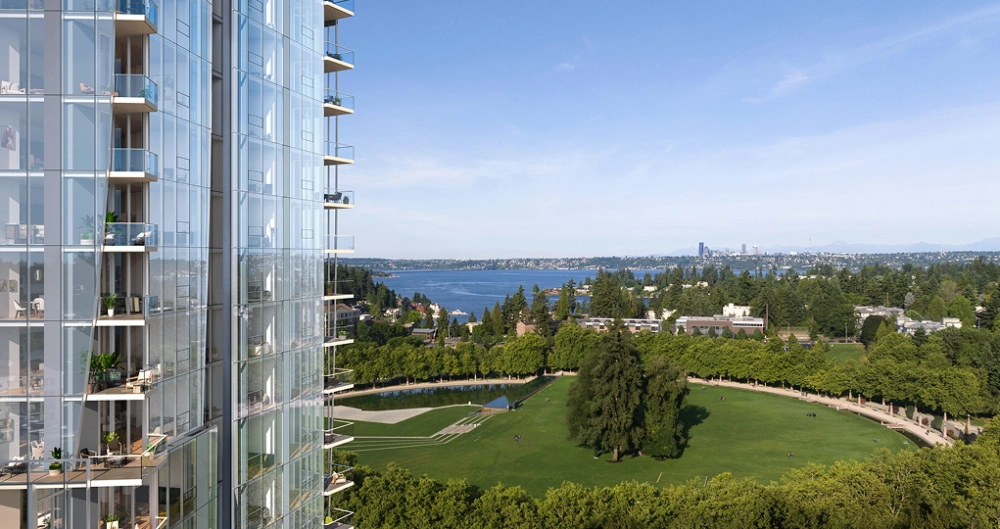
In downtown Bellevue, choosing the right building matters more than choosing the right unit. The building determines your amenity access, your HOA cost structure, your community, your view potential, your resale market, and your long-term experience as a resident. An ideal unit in the wrong building is a worse outcome than a good unit in the right one.
Start by identifying your non-negotiables. Do you need a pool? Bellevue Pacific Tower and One88 have them; most others don’t. Do you need to walk to work? Washington Square and Avenue Bellevue are within a few blocks of the largest employer concentrations. Do you have dogs? One88 and Mari have dedicated pet amenities. Do you want the newest possible construction? Mari (2024) is your answer. Do you want the deepest resale market? Bellevue Towers (539 units) has the most available at any given time.
Once you have your non-negotiables, use our building comparison tool to narrow the list to two or three candidates, then book a building walkthrough for each.
HOA Fees – The Hidden Variable That Changes Everything
Monthly HOA fees in downtown Bellevue range from approximately $600 to over $3,000 per month. That range can add or subtract $12,000–$36,000 from your annual cost of ownership – a factor that dramatically changes the true cost comparison between buildings that look similar on price.
Understand what is covered. The best HOA value in downtown Bellevue is probably Bellevue Towers, where fees of $700–$1,800 cover gas, central hot water, earthquake insurance, garbage, sewer, and water in addition to building maintenance and concierge. Compare that to a building where you pay $800/month in HOA but then also pay $200/month in utilities, and the real comparison is $1,000 vs. $1,800 – a smaller gap than it first appears.
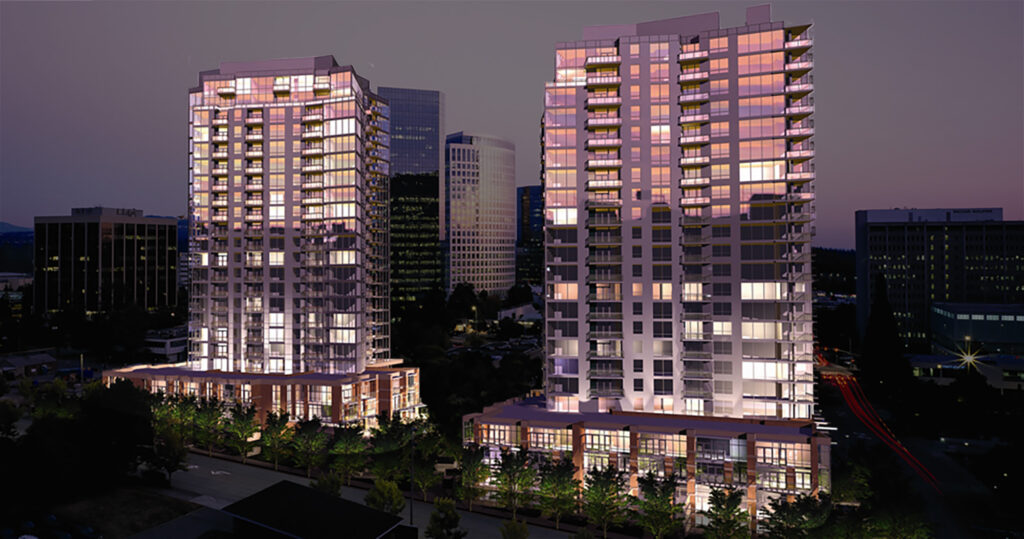
Always review the reserve fund study. Washington State requires condo associations to conduct periodic reserve fund studies that assess the building’s financial health and the adequacy of reserves for future capital projects. A building with underfunded reserves is a building that will eventually levy a special assessment – an unexpected cost that can reach tens of thousands of dollars per unit. Ask your agent for the reserve fund study and HOA meeting minutes for any building you’re seriously considering.
Special assessments are a known risk in older buildings. The 2008 construction vintage buildings (Bellevue Towers, Washington Square) have been managing capital projects for nearly 20 years. The 1994 and 2000 vintage buildings (Bellevue Pacific, Palazzo) have even longer maintenance histories. This doesn’t mean they are poor investments – it means due diligence is essential.
Views – How to Analyze Them Before You Buy
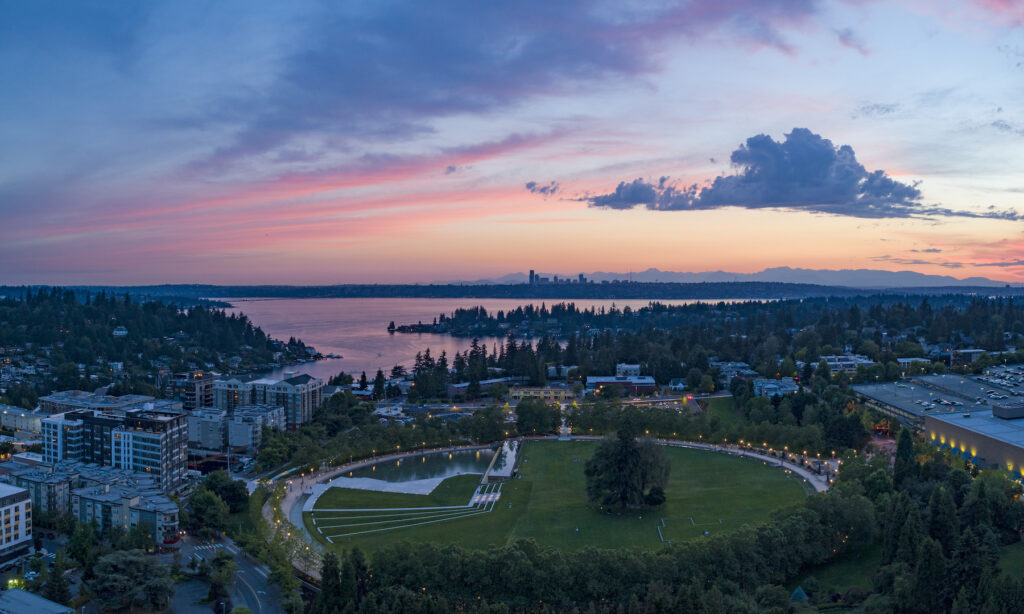
View quality is the single largest driver of per-square-foot price variation within any downtown Bellevue building. A unit on floor 30 with Lake Washington and Seattle skyline views might sell for 30–40% more than an identical unit on floor 8 with a neighboring building view.
How to analyze views:
Know your compass directions. West-facing units see Lake Washington and the Seattle skyline. South-facing units on high floors can see Mount Rainier on clear days. East-facing units see the Cascade Range. North-facing units see the Bellevue cityscape and, from high floors, Lake Washington’s northern shore.
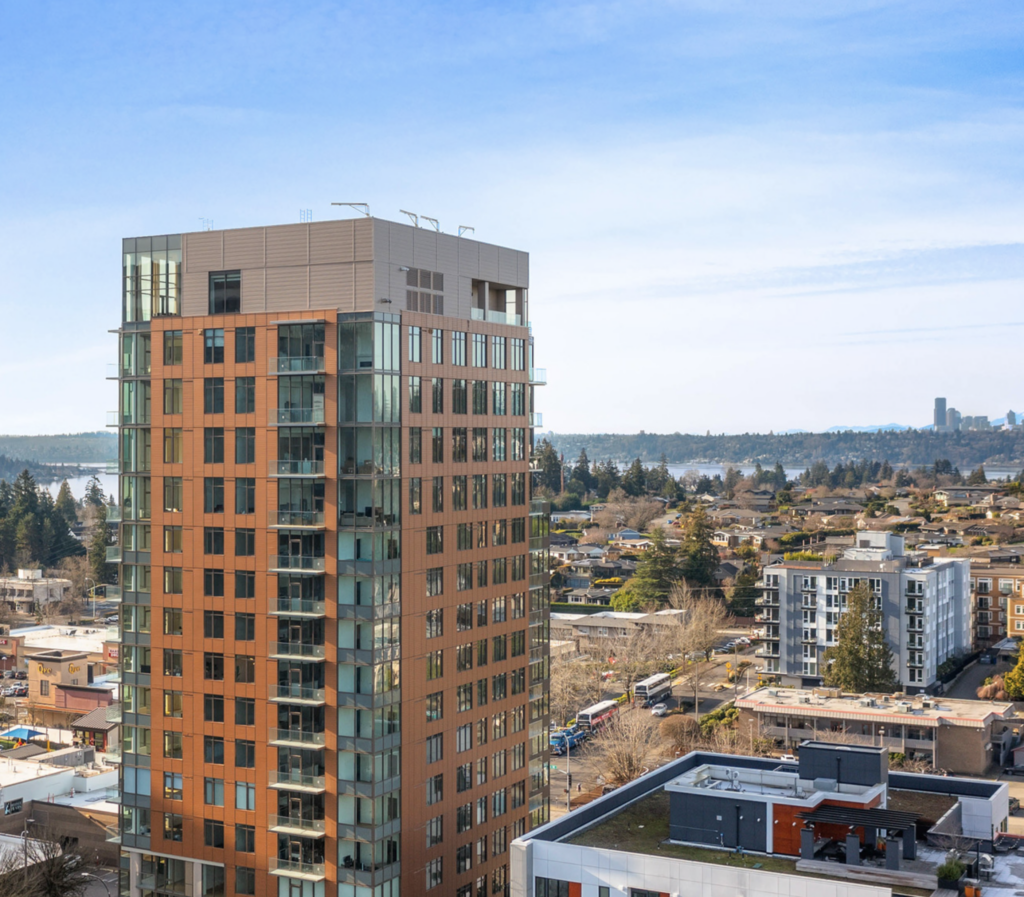
Understand obstruction risk. New buildings go up. A unit with an unobstructed view today may have a partially obstructed view in five years if a new tower is constructed nearby. Review current development plans for the blocks immediately surrounding your building.
Ask about floor-specific views. In many buildings, the critical threshold is around floors 20–25, where the building clears surrounding structures and views open dramatically. Units just below that threshold often sell at a significant discount – and sometimes that discount is worth taking, sometimes it isn’t. Ask for a side-by-side view comparison from the selling agent.
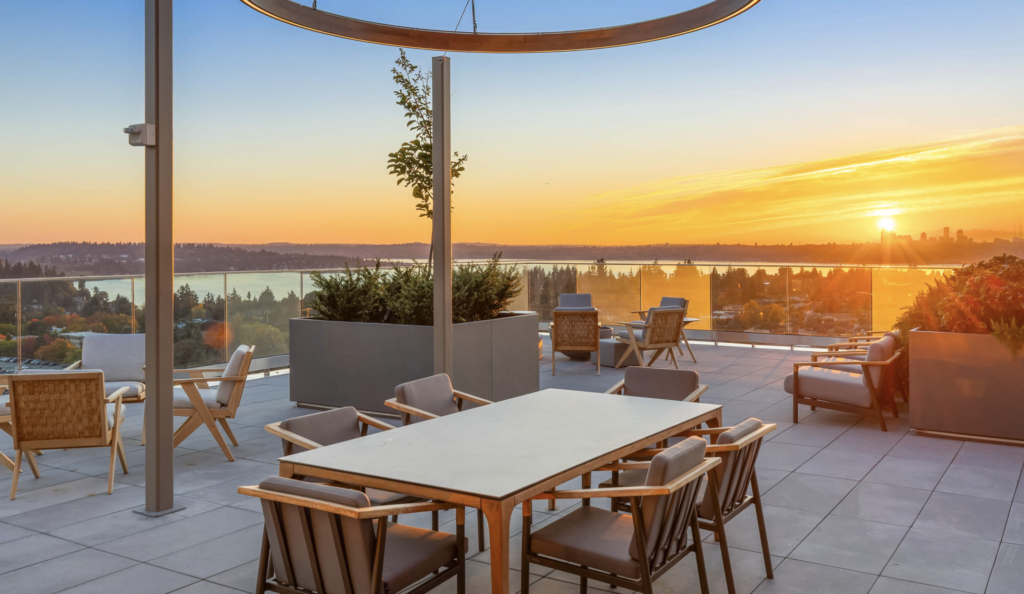
Visit at different times of day. A west-facing unit on a high floor is spectacular at sunset. A north-facing unit may get very little direct light. Visit the specific floor (or as close as you can get) during morning and evening to understand the light quality across the day.
Parking, Pets, and Rentals – Always Verify
Three variables that buyers often research late and should research early:
Parking: Every major downtown Bellevue condo building includes underground parking, but the details matter. How many stalls are included with your unit? What is the stall location within the garage – is it convenient to the elevator? Does the building allow additional stall purchases? Is EV charging available, and if not, can you install it? These are questions to answer before making an offer, not after.
Pets: All downtown Bellevue buildings permit pets, but restrictions vary significantly. Weight limits, breed restrictions, and the number of pets per unit differ by building and can change over time as HOAs update their rules. If pets are part of your household, verify the current pet policy – in writing, from the HOA – before proceeding.
Rentals: Almost all downtown Bellevue condo buildings prohibit short-term rentals (less than 30 days) and many have minimum lease terms (typically 3–6 months) for long-term rentals. Some buildings have rental cap percentages that limit how many units can be rented at any given time. If rental income is part of your financial plan, verify the current rental policy with the HOA before purchasing – do not rely on what the listing agent tells you.
Buyer Guide – Frequently Asked Questions
Q: How long does it take to buy a condo in downtown Bellevue?
A typical resale purchase from accepted offer to closing takes 30–45 days in Washington State. New construction presales have longer timelines – often 12–24 months between purchase agreement and move-in. During that period, your deposit is in escrow and the purchase contract is binding.
Q: Do I need a buyer’s agent to purchase a downtown Bellevue condo?
You are not legally required to have a buyer’s agent, but having one is strongly advisable – especially in a building-specific market like downtown Bellevue where negotiation dynamics, HOA reviews, and view analysis require local expertise. In Washington State, buyer’s agent commissions are typically paid by the seller, so you generally pay nothing out of pocket for buyer’s representation.
Q: What due diligence should I do before making an offer?
At minimum: review the last 12 months of HOA meeting minutes, the current year’s HOA budget and financials, the most recent reserve fund study, all CC&Rs and rules and regulations, any pending litigation involving the HOA, and any special assessments levied or anticipated. Your attorney or the escrow company can assist with obtaining these documents.