

The $200 Million Bridge That Could Change What Downtown Bellevue Living Means
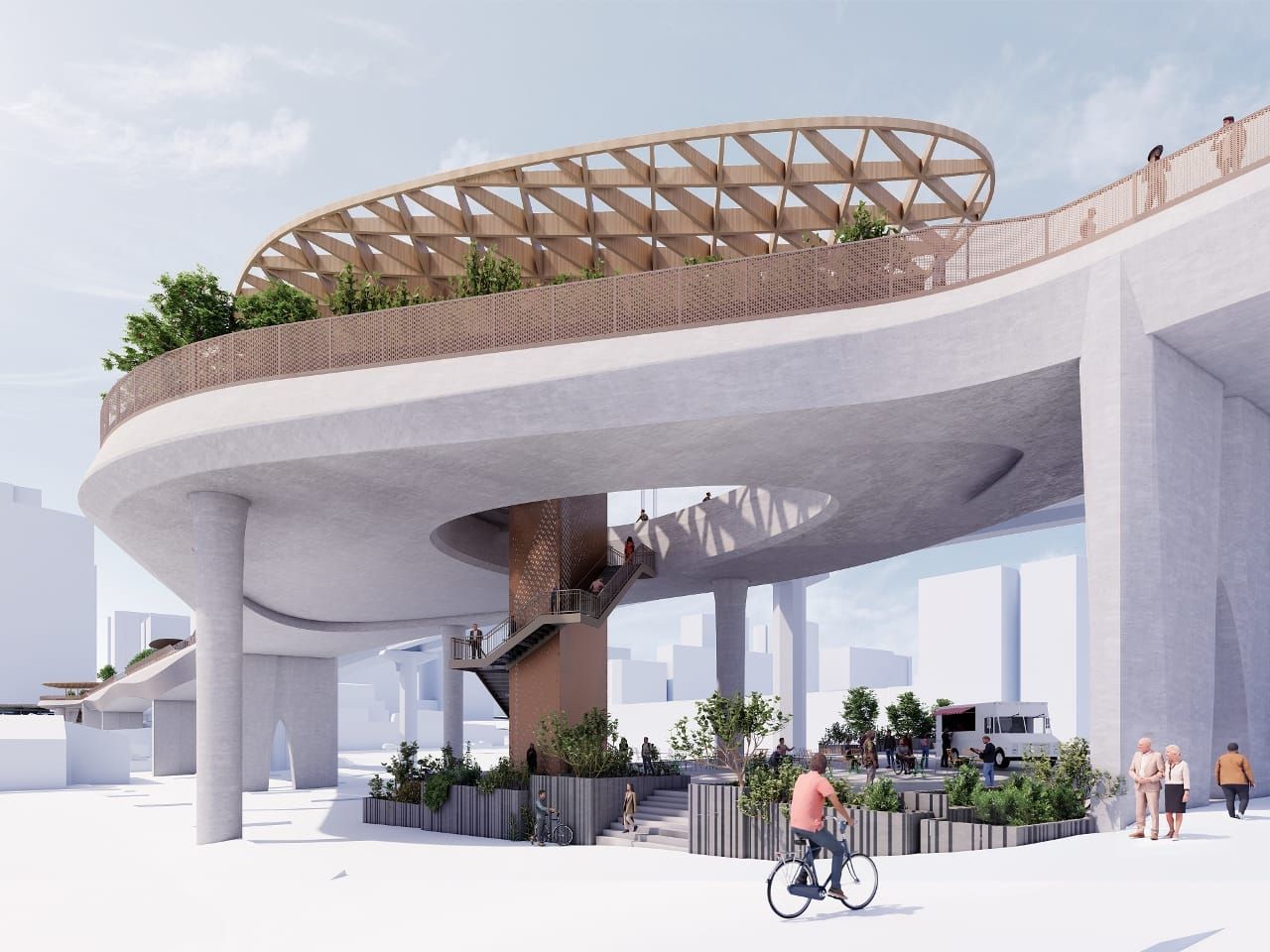
Photo Credits: City of Bellevue
Bellevue is planning to build a pedestrian and bicycle bridge over Interstate 405. It will be at minimum 30 feet wide, up to 40 feet across the freeway span, with separate walking and rolling paths, elevator access at 112th and 116th Avenues NE, and an estimated price tag of $175 to $230 million. The city expects to open it in 2030.
This is not a vague planning document. The project is at 30% design, the City Council allocated $15 million in the 2025-26 budget to continue that work, Amazon contributed $2.5 million for early design, and Bellevue created a dedicated Office of the Grand Connection in 2025 specifically to see it through. This is happening.
For people who own or are considering buying a condo in downtown Bellevue, the Grand Connection Crossing is worth understanding in concrete terms.
What the Grand Connection Actually Is
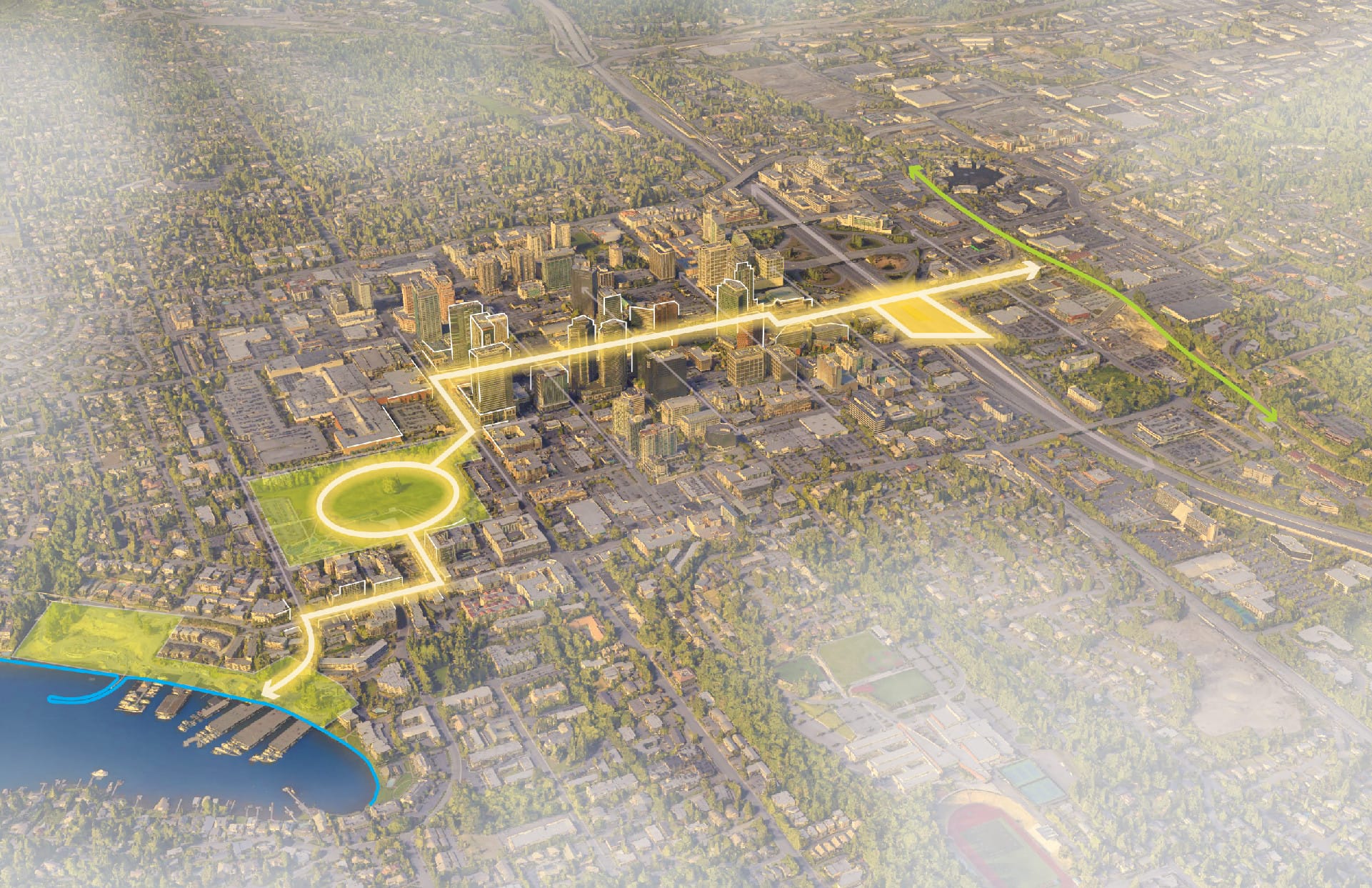
The Crossing is the centerpiece of a larger 1.5-mile pedestrian corridor that runs from Meydenbauer Bay Park through Old Bellevue and Downtown Park, continues through the retail and civic core of downtown, and crosses I-405 to connect with Eastrail in the Wilburton neighborhood.
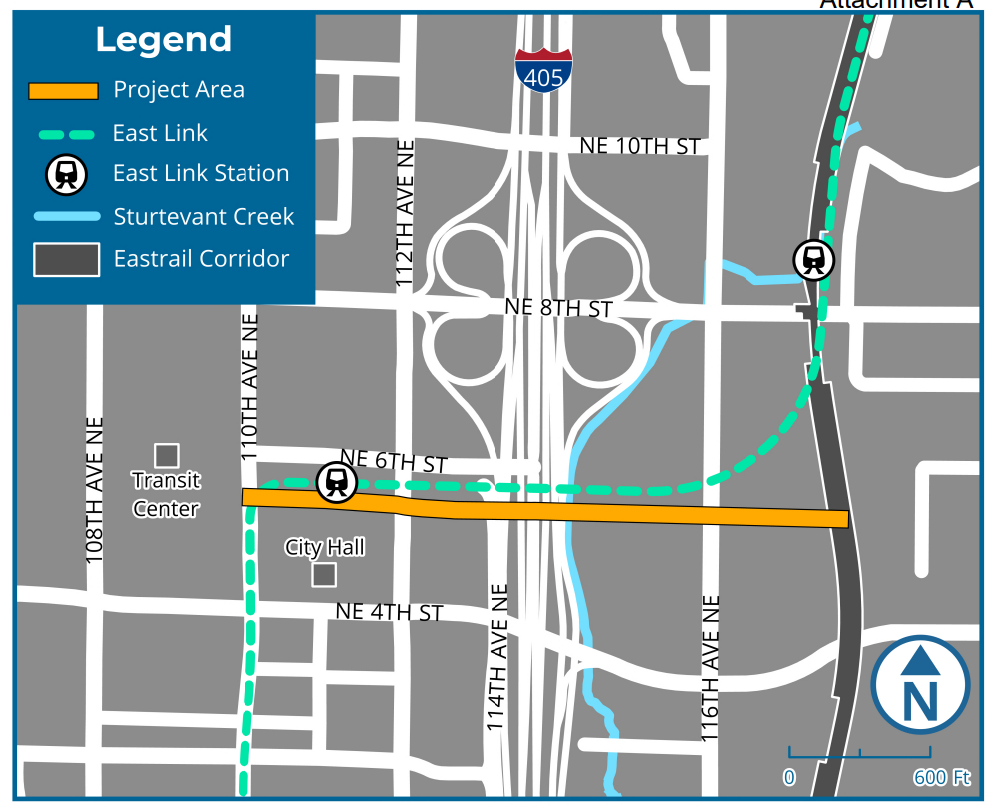
Right now, I-405 is a hard wall on the eastern edge of downtown Bellevue. Crossing it on foot is unpleasant at best. The Wilburton area, Eastrail, and East Main are effectively cut off from the downtown pedestrian experience. The Crossing changes that: it turns a 10-lane freeway from a barrier into a seam.
When it opens in 2030, a resident of Bellevue Towers or Washington Square will be able to walk or bike in a continuous, protected, purpose-built corridor from the waterfront at Meydenbauer Bay through downtown, over the freeway, and onto a regional trail network, without a single significant gap.
Why This Is More Significant Than Most Infrastructure Projects
The cities that command durable residential premiums share a common characteristic: connected, walkable public infrastructure that compounds over time. Seattle’s Burke-Gilman Trail didn’t just create a bike path; it reshaped which neighborhoods felt desirable. The Beltline in Atlanta transformed undervalued industrial land into the city’s hottest real estate corridor. Infrastructure that links neighborhoods rather than divides them has a track record of shaping where people want to live.
Bellevue’s Grand Connection follows the same logic at a smaller scale. It takes what is already downtown Bellevue’s strongest selling point (walkability to Bellevue Square, Downtown Park, and Main Street) and extends it eastward to a regional trail and a light rail station at East Main. That’s a meaningful expansion of what “walkable downtown Bellevue” means in practice.
The Specific Buildings That Benefit Most
Not every downtown Bellevue condo building sits equally close to the Grand Connection corridor. The buildings that will feel the most direct impact are those on the eastern side of the downtown core: Washington Square (10610 NE 9th Pl), One Lincoln Tower (700 Bellevue Way NE), and Bellevue Towers (500 106th Ave NE) are all within a few blocks of where the corridor currently runs. Buildings like The Metropolitan and Mira Flats sit closer to 110th and 108th Avenues, putting them near the eastern approach to the crossing itself.
For buyers comparing buildings, proximity to the completed Grand Connection corridor is a reasonable factor to weight. The western buildings near Meydenbauer Bay (The Vue, Astoria at Meydenbauer) benefit from the Meydenbauer end of the corridor. The buildings closer to 112th benefit from the crossing end.
What Buyers Should Understand About the Timeline
2030 is four years away. The project is at 30% design. Between now and then, the city needs to issue an RFP, select a contractor under a GC/CM delivery method, complete design, acquire any remaining property, and build a 40-foot-wide bridge over an active interstate. That is a realistic but demanding schedule.
The honest answer for a buyer purchasing a condo today is that the Grand Connection Crossing is priced into the neighborhood as a future asset, not a present one. It should factor into a long-term view of the neighborhood’s trajectory, not into the decision of whether to buy this month versus next.
What is already real is the corridor that exists on both sides of the freeway gap. The Meydenbauer Bay to downtown segment is largely in place. The Eastrail connection on the Wilburton side exists. The Crossing completes the link.
The Bottom Line
A $200 million pedestrian bridge that connects downtown Bellevue to a regional trail network, funded by the City Council, designed by a dedicated city office, and supported by Amazon, is a serious commitment by a serious city. It will make downtown Bellevue more connected in 2030 than it is in 2026. That is good for the people who live there and good for the long-term appeal of owning a condo in the neighborhood.
If you are buying a downtown Bellevue condo with a 5-plus year horizon, this is one of the better-documented reasons to feel confident about the neighborhood’s direction.
For more information, please visit City of Bellevue